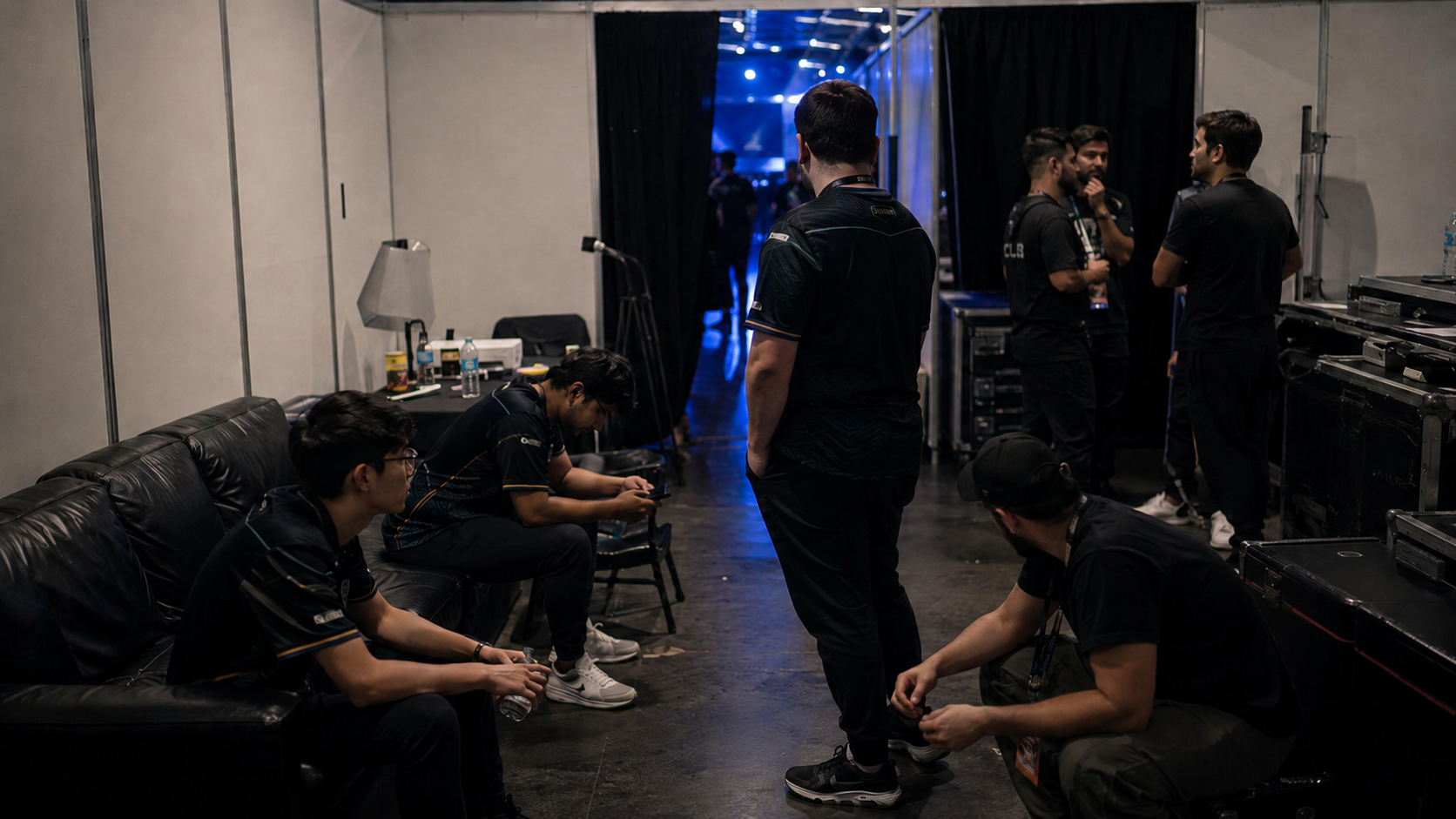
When people watch an esports tournament, they see the stage, the crowd, the broadcast and the match.
Players experience something completely different.
Their day can involve transport, accreditation, practice areas, media obligations, technical checks, waiting times, schedule changes and repeated movement between public and restricted spaces — all before competition begins.
This is where player experience becomes an operational issue.
Good player experience is not about luxury. It is about removing unnecessary friction.
A player should know where to go, when to move and who to contact when something changes. Transport should make sense. Practice areas should be usable. Information should be consistent. Backstage movement should not create additional stress.
None of these elements wins a match.
But poorly managed operations can create distractions that have nothing to do with competition.
The challenge becomes even greater at international events. Players may arrive from different countries, speak different languages and operate with different staff structures. Some travel with coaches and managers. Others arrive with a much smaller support system.
Clear communication therefore matters as much as logistics.
When participant flows work correctly, nobody talks about them. Players simply move from one stage of their day to another without having to think about the system behind it.
That invisibility is part of the job.
As esports continues to adopt the production standards of major sports and entertainment events, player experience should be treated as part of event infrastructure — alongside broadcast, venue operations and competition management.
The goal is simple:
let players focus on playing.
Everything around them should make that easier, not harder.